Raleigh leaders plan to vote on teen curfew next month as police chief cites 'trend of violence'

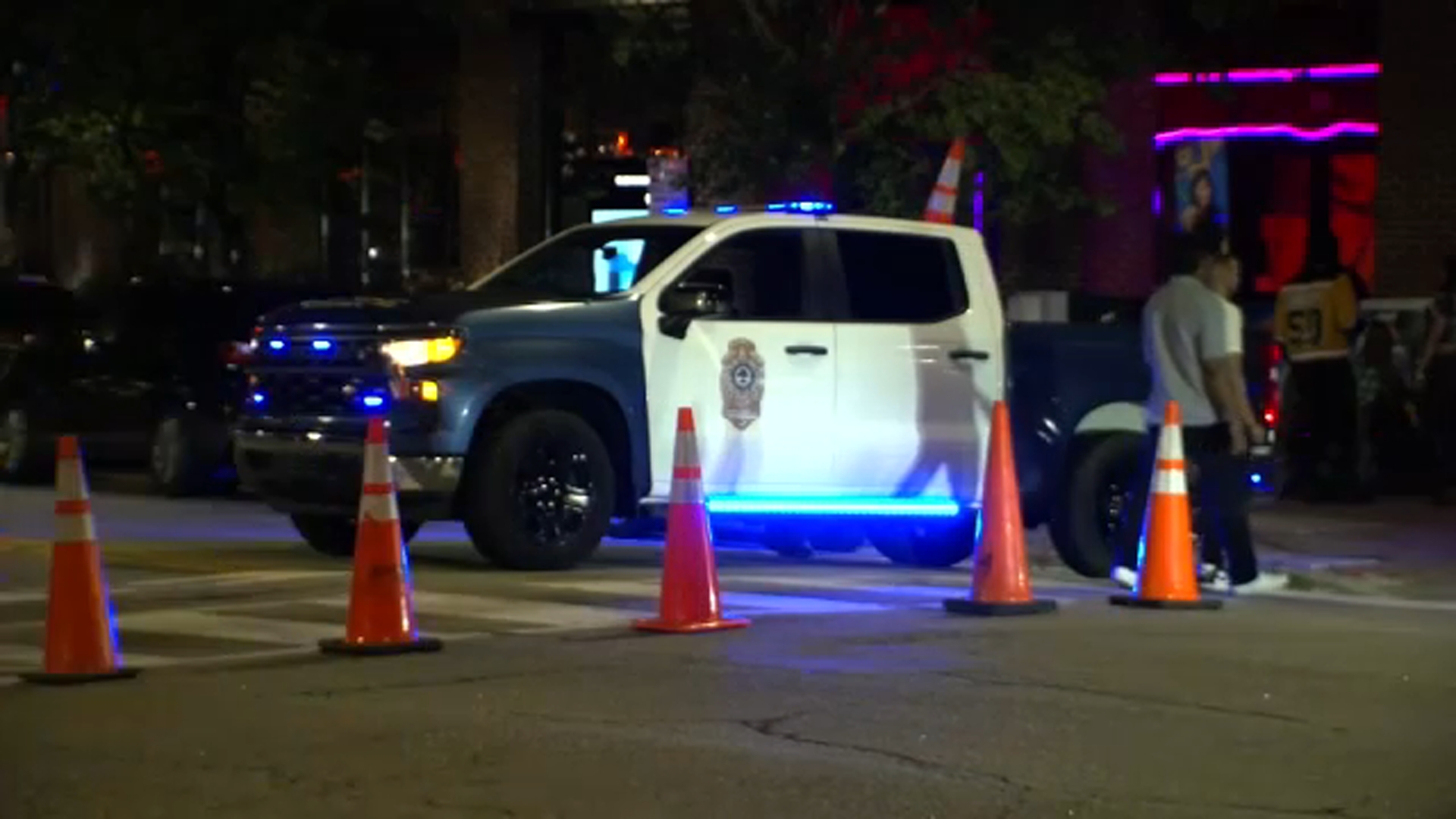
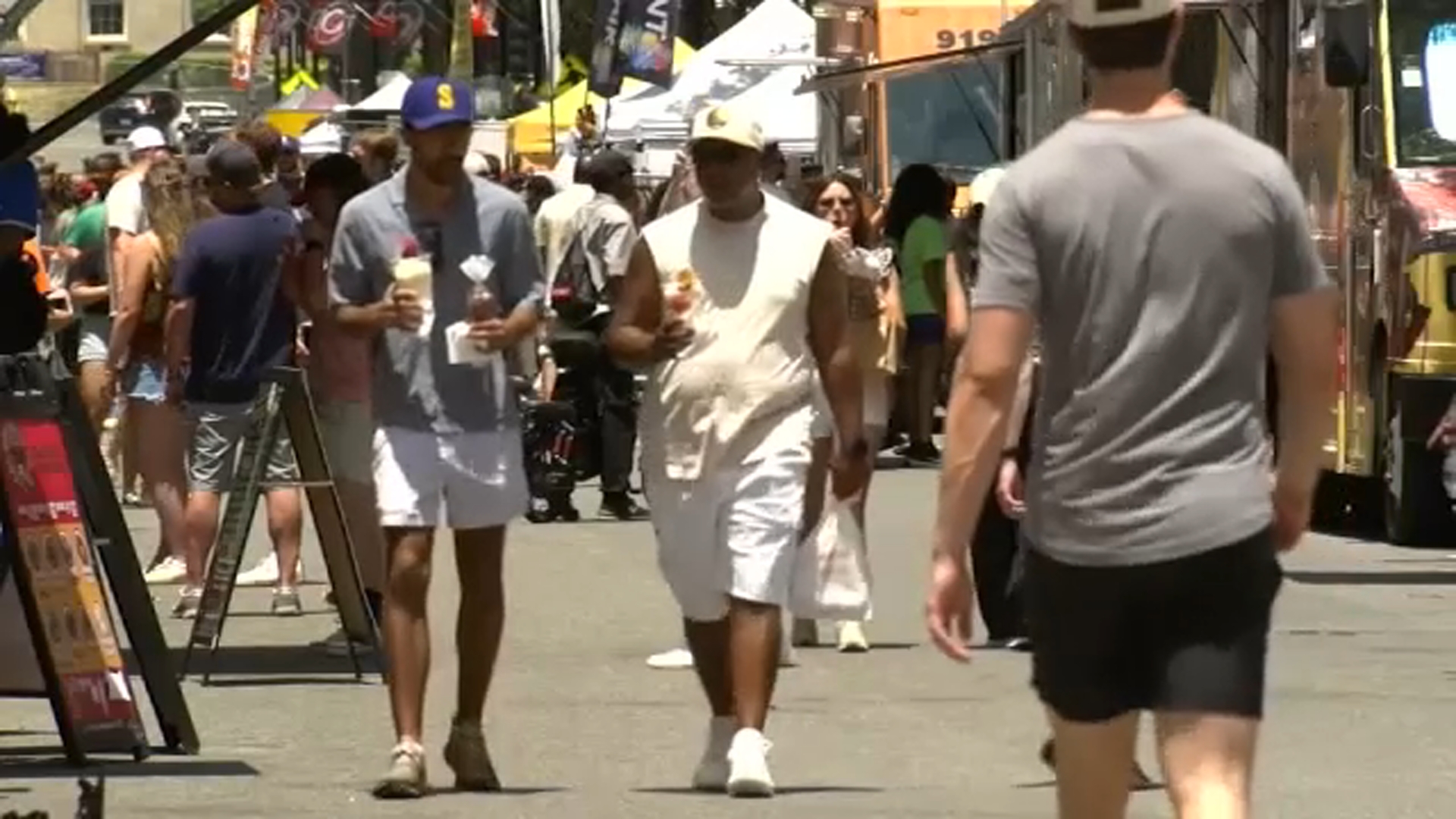
RALEIGH, N.C. (WTVD) -- Raleigh city leaders and police moved a step closer on Tuesday at City Hall to a possible curfew for teens younger than 18 following a July 4 shooting in Brier Creek and a large teen gathering on Glenwood South the morning of July 5 that city officials described as a "teen takeover."
No vote or decision was made. However, the work session gave councilmembers a chance to hear concerns and consider next steps, and a vote is expected next month.
"I want to make sure our black and brown kids are not being targeted," said councilmember Stormie Forte.
Police said the proposed curfew, which would run from 11 p.m. to 5 a.m., has three objectives: youth protection, public safety and parental responsibility.
According to Raleigh Police Department data, crimes involving juveniles as suspects or arrestees are up 9% compared to this time last year. So far in 2026, there have been 894 crimes where juveniles have been the suspect and in many cases arrested. During this same time period in 2025, that figure was 821.
Among the sharpest increases were the number of actual firearm rounds fired into a vehicle or a dwelling. There were 15 incidents in 2025 compared with 190 so far in 2026. That represents an increase of 1,167%.
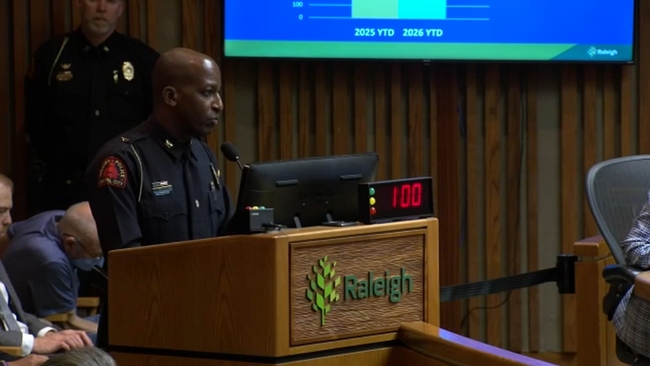
"Just let that sink in," said Raleigh Police Chief Rico Boyce. "We're seeing a trend of violence in our juveniles increase year over year."
Raleigh Police Chief Rico Boyce said the proposal is intended to improve public safety.
"Today is all about safety. Making sure that our youth, that they are safe as they maneuver throughout our city, but also those youth, juveniles that are committing crimes, that victims of those crimes, that they're safe," Boyce said.
The hours under consideration closely mirror curfews already in place in other North Carolina cities, including Charlotte, Fayetteville, Rocky Mount and Winston-Salem.
The proposed ordinance would be enforced based on complaints, according to police. Violations involving minors would be handled through the juvenile court system. Adults found responsible for violating the ordinance could face a Class 3 misdemeanor charge and a fine of up to $500.
"We are putting a situation in place that is going to deeply penalize poor people, that is going to overcriminalize our children, in a way that in the city of Raleigh, especially, that disproportionately falls on the shoulders of Black children," said Dawn Blagrove, Executive Director of EmancipateNC.
Some city leaders have expressed skepticism, noting Raleigh has not seen another teen takeover since the July 4 weekend. Still, police say recent incidents underscore the need for new tools.
Boyce said the July 4 and July 5 events "got everyone's attention throughout the entire nation of what happened in our great city."
However, Raleigh resident Shane Stanley addressed the council on Tuesday, saying that the majority of the people he saw on Glenwood South that evening were "grown adults."
"We don't think punitive measures get us to the root causes of disruptive behavior or unsatisfactory behavior. We like to think that we should explore a more community-based approach and not move to a reactionary response," said Letha Muhammad, Co-Executive Director of Education Justice Alliance.
Blagrove said the city should explore other options before adopting a curfew.
"If we care about the children of Raleigh, then maybe another alternative would be to cut down those social districts. Just stop. Take away the incentive. We're not going to do that, and that is not on the table because number one, that would center children. And number two, it would de-center the economic mobility of the city of Raleigh, which our city council is more concerned with," she said.
Blagrove wants to see city leaders study how other states and municipalities have addressed similar issues in deciding how to move forward.
"I think that there is no shortage of places where accountability can be taken as it relates to our children. That accountability has to start in the home, but it also has to start with our elected officials whose job it is to ensure that all of our communities are safe and that all of our communities are getting access to enjoy this city just like everyone else, without being penalized for that," Blagrove said.
Others suggested creating additional places for teens to gather safely during evening hours.
"What it could be is a community space that's open late night where young people can come and listen to music, who they can come and play basketball with each other, with trusted adults in the community there to assist them," said Muhammad.
Muhammad said young people and their families should play a central role in the discussion.
"If we're not actually in community, speaking to the young people and their families, we may still come up with solutions that aren't the solutions that would actually help," she said.
Boyce emphasized that a curfew would not be a cure-all and that including the voices of youth was important.
.
"A curfew is not a fix. It is a tool," he said. "We need conversations from our youth about what they feel and what they think will work. That's an important piece in crafting a youth protection ordinance is to hear from the youth. That's the first thing in youth protection. We need to hear that feedback from the youth about what they're seeing and what they're experiencing. We're going to have many more conversations to see what it looks like here in the capital city."
Tuesday's work session and council meeting served as an opportunity for leaders to continue discussing options and determine whether a curfew or another approach would be beneficial.
"If we could understand the pros and cons and some of the unintended consequences would be helpful for us," Councilman Mitchell Silver said. "It's very important we have a balanced approach."
The city plans to hold at least two additional public hearings next month to gather feedback on the proposal, and the city council is expected to vote on the proposed curfew Sept. 15 following the second public comment session.
.